Table Of Content
- What Affects Tesla Battery Life?
- 1. High Temperatures
- 2. Charging Habits
- 3. Fast Charging
- 4. Age
- Tips to Maximise Tesla Range
- Tesla Battery Types
- Tesla Models Available in India
- Common Mistakes That Reduce Battery Life
- Maintenance Tips
- Will a Tesla Last Longer Than a Petrol Car?
- Frequently Asked Questions:
- Final Verdict
How Long Do Tesla Cars Last? Battery Life, Range & Maintenance Guide for India (2026)
Tesla has officially entered the Indian market, and one of the biggest questions buyers ask is, “How long does a Tesla really last?” Many people worry that an electric vehicle’s battery will need replacement after a few years, but real-world data tells a very different story.
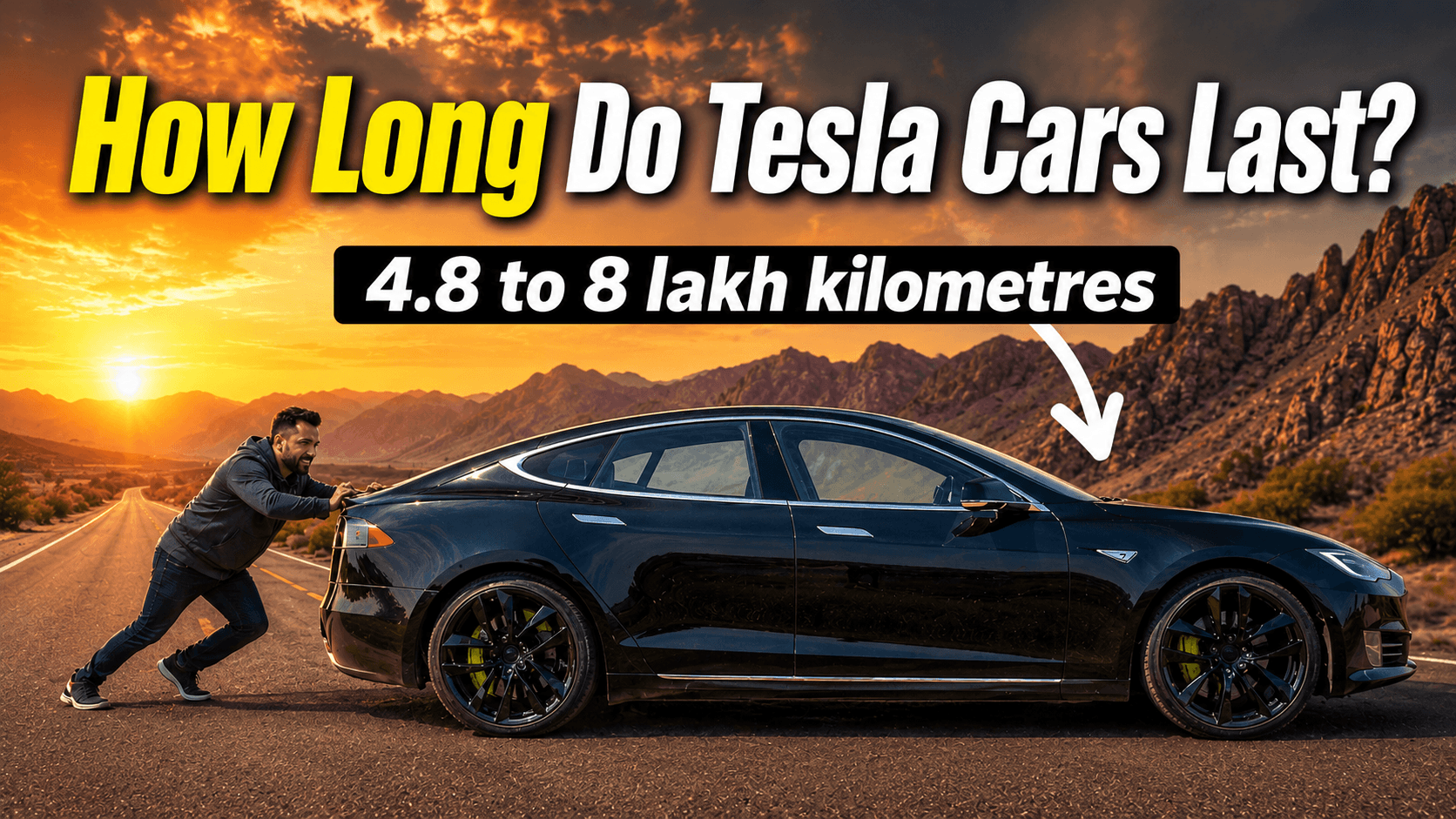
According to Tesla’s recent battery durability reports and fleet data, most Tesla battery packs are designed to last 4.8 to 8 lakh kilometres (300,000–500,000 miles) under normal conditions. For the average Indian driver, who covers around 10,000–15,000 km annually, a Tesla battery can comfortably last 20 to 30 years before reaching the end of its useful life. In most cases, the battery is likely to outlast the rest of the vehicle.
What Affects Tesla Battery Life?
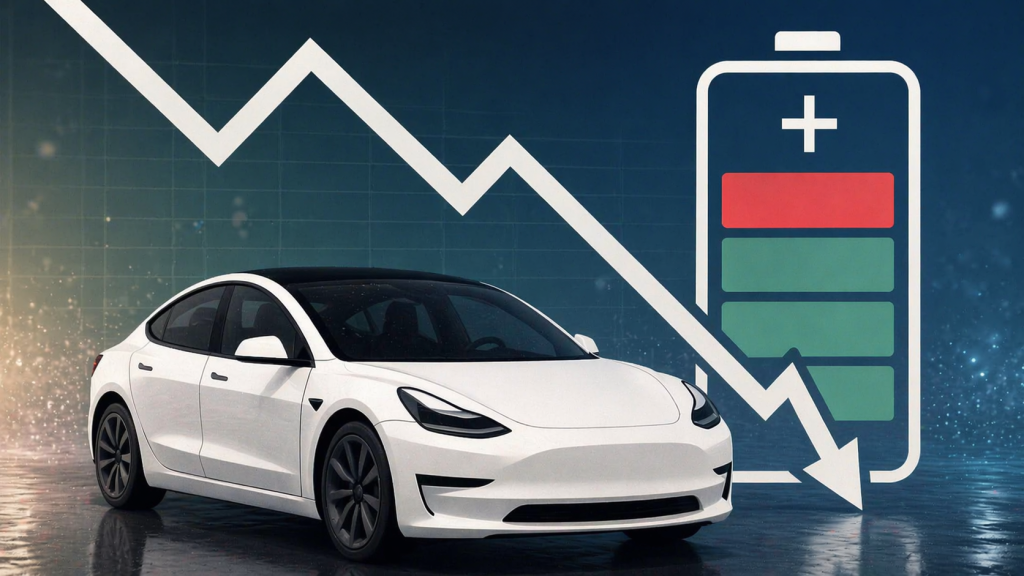
A Tesla battery naturally loses a small amount of capacity over time, but several factors determine how quickly this happens.
1. High Temperatures
India’s hot summers can be challenging for any lithium-ion battery. Tesla’s advanced thermal management system helps keep battery temperatures under control, but regularly parking the car under direct sunlight for long periods may accelerate battery degradation.
Whenever possible, park in a shaded area or covered parking.
2. Charging Habits
Frequently charging the battery from 0% to 100% places more stress on the cells than keeping the battery between 20% and 80% during daily driving.
For most Tesla models, charging to 80% for everyday use is the healthiest practice. Reserve 100% charging for long road trips.
3. Fast Charging
Tesla Superchargers are extremely convenient for highway travel, but regular DC fast charging generates more heat than home AC charging.
If you mostly drive within the city, using a home wall charger is the better option for long-term battery health.
4. Age
Like every lithium-ion battery, Tesla batteries slowly age even if the car isn’t driven much. Fortunately, this process is gradual, and modern battery management systems significantly slow down degradation.
Tips to Maximise Tesla Range
Getting the best range isn’t just about battery size—it also depends on how you drive.
- Use Chill Mode for smoother acceleration and better efficiency.
- Take advantage of regenerative braking, which recovers energy while slowing down.
- Maintain a steady speed on highways instead of frequent hard acceleration.
- Keep tyre pressure at the recommended level.
- Remove unnecessary luggage to reduce vehicle weight.
- Pre-condition the battery before long drives whenever possible.
These habits can improve efficiency and help maintain battery performance over the years.
Tesla Battery Types
Tesla currently uses multiple battery technologies depending on the model.
| Battery Type | Used In | Main Benefit |
|---|---|---|
| LFP (Lithium Iron Phosphate) | Standard Range models | Excellent durability and can be charged to 100% regularly |
| NMC/NCA | Long Range and Performance models | Higher energy density and longer driving range |
| 4680 Structural Battery | Selected newer models | Better structural strength, efficiency and safety |
Each battery chemistry has its own advantages, but all are designed to deliver hundreds of thousands of kilometres with proper care.
Tesla Models Available in India
As Tesla expands in India, buyers can expect models such as:
- Tesla Model 3
- Tesla Model Y
- Tesla Model S (limited availability)
- Tesla Model X (limited availability)
Among these, the Model 3 and Model Y are expected to become the most popular choices because they offer an excellent balance of range, technology and practicality for Indian roads.
Common Mistakes That Reduce Battery Life
Many owners unknowingly reduce battery efficiency through poor driving habits.
Avoid these common mistakes:
- Frequently draining the battery below 10%
- Charging to 100% every day
- Relying exclusively on DC fast charging
- Driving aggressively with rapid acceleration
- Ignoring tyre pressure
- Leaving the vehicle parked for weeks with a very low battery
- Carrying unnecessary weight
- Installing oversized aftermarket wheels or tyres that reduce efficiency
Making a few simple changes can significantly improve battery longevity.
Maintenance Tips
One of Tesla’s biggest advantages is its low maintenance compared to petrol or diesel cars.
To keep your Tesla in excellent condition:
- Keep the battery between 20% and 80% for daily use.
- Charge at home whenever practical.
- Update the vehicle software regularly.
- Check tyre pressure every month.
- Rotate tyres according to Tesla’s recommended service schedule.
- Use regenerative braking to reduce brake wear.
- Keep the vehicle clean, especially during the monsoon season.
Unlike conventional vehicles, Tesla owners don’t have to worry about engine oil changes, spark plugs or fuel filters.
Will a Tesla Last Longer Than a Petrol Car?
For many owners, the answer is yes.
A well-maintained petrol car typically lasts around 2.5 to 3 lakh kilometres before requiring major engine work. In contrast, Tesla batteries are engineered to deliver 4.8 to 8 lakh kilometres, while electric motors generally have far fewer moving parts and require significantly less maintenance.
This means a Tesla can remain reliable for decades if properly maintained.
Frequently Asked Questions:
Check out the 21 most common FAQs on how to make your Tesla last:
Most Tesla batteries are expected to last between 4.8 lakh and 8 lakh kilometres, depending on driving conditions and maintenance.
No. For most Tesla models, keeping the battery between 20% and 80% is recommended. LFP-equipped models are an exception and can be charged to 100% regularly.
Occasional fast charging is perfectly safe. However, using home AC charging for daily needs is better for long-term battery health.
Yes. High temperatures can accelerate battery ageing, although Tesla’s liquid cooling system helps minimise the impact.
Yes. Regenerative braking recovers energy during deceleration, increasing driving efficiency and reducing brake wear.
Final Verdict
Tesla vehicles are designed to last much longer than many people expect. With battery packs capable of delivering 4.8 lakh to 8 lakh kilometres, low maintenance requirements and continuous software updates, they offer excellent long-term value for Indian buyers.
Whether you’re considering the Model 3 or Model Y, following good charging habits, avoiding excessive fast charging and driving efficiently can help your Tesla deliver reliable performance for decades. For most Indian drivers, the battery is unlikely to be the first major component that needs replacement, making a Tesla one of the most durable electric vehicles available today.
Additional Reading:
Spread Some Love
Author