Table Of Content
- Understanding Your Electrical Panel
- Homes With Panels Under 100 Amps
- Homes With 100 to 150 Amp Panels
- Homes With Panels Above 150 Amps
- Reasons to Avoid an Electrical Panel Upgrade
- Higher Upfront Costs
- Potential Project Delays
- Increased Pressure on Local Infrastructure
- Advantages of Upgrading Your Electrical Panel
- More Available Electrical Capacity
- Better Support for Future Expansion
- Can Most Homes Electrify on a 100-Amp Panel?
- Making the Right Choice
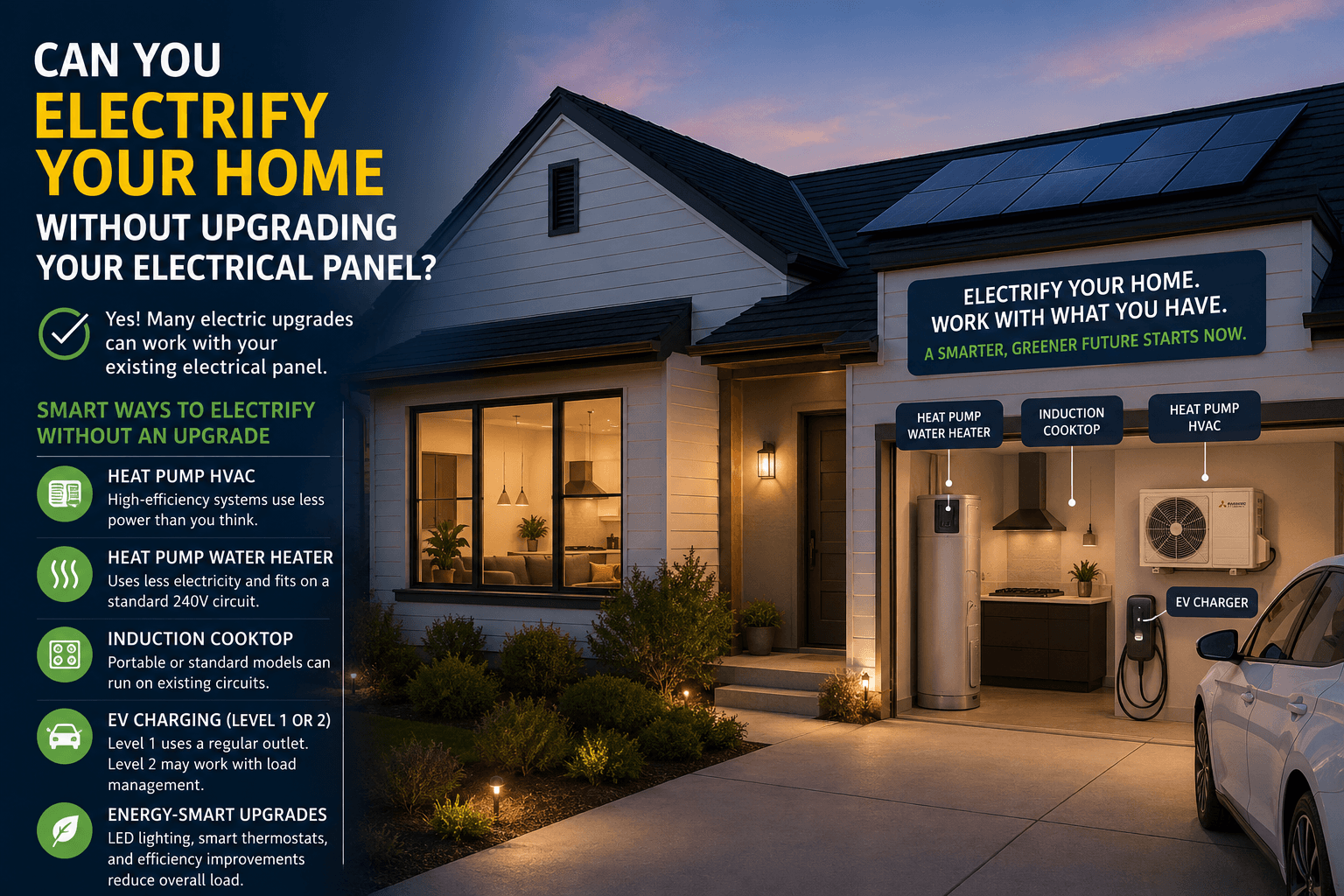
Can You Electrify Your Home Without Upgrading Your Electrical Panel?
Many homeowners assume that switching to electric appliances automatically means they need a larger electrical panel. While electrification does increase a home’s electricity demand, a panel upgrade is often not required.
In fact, with careful planning and the right equipment choices, many homes can transition to electric heating, water heating, cooking, and vehicle charging without replacing their existing electrical panel. Understanding your current panel capacity and future energy needs is the first step toward making the right decision.
Understanding Your Electrical Panel
An electrical panel controls how much electricity can safely flow throughout your home. Its size is typically measured in amps, with common residential panels ranging from 60 amps to 200 amps or more.
Whether you need an upgrade depends largely on your panel’s existing capacity, its condition, and the amount of new electrical load you plan to add.
Homes With Panels Under 100 Amps
If your home has a panel rated below 100 amps, such as 40-amp or 60-amp service, an upgrade is often necessary before undertaking major electrification projects.
Older panels may also require replacement if they show signs of deterioration, corrosion, damage, or safety concerns. In these situations, homeowners can choose to replace the panel without necessarily increasing its amperage if the existing capacity is sufficient for their needs.
However, for most households pursuing significant electrification, increasing service capacity at the same time often makes practical sense.
Homes With 100 to 150 Amp Panels
A panel rated between 100 and 150 amps is typically capable of supporting a fully electrified home.
Many homeowners are surprised to learn that they can add electric appliances, heat pumps, induction cooking equipment, and EV chargers without increasing panel size. The key is thoughtful planning and selecting energy-efficient equipment designed to minimize peak electrical demand.
Load management strategies and smart energy technologies can further help homeowners maximize the capacity of their existing electrical systems.
Homes With Panels Above 150 Amps
If your home already has a panel larger than 150 amps, there is a strong possibility that electrification can proceed without any panel modifications.
In many cases, homeowners with 200-amp service have sufficient capacity for multiple electric appliances, heating systems, and EV charging equipment without additional planning requirements.
Even so, selecting efficient appliances and managing electrical loads wisely can help reduce installation costs and improve overall energy performance.
Reasons to Avoid an Electrical Panel Upgrade
Although a larger electrical panel offers additional capacity, upgrading is not always the most practical or cost-effective choice.
Several factors should be considered before deciding to replace an existing panel.
Higher Upfront Costs
One of the most significant drawbacks of a panel upgrade is the cost.
A standard panel replacement typically ranges from approximately $2,000 to $4,000. This estimate generally includes the new panel, labor costs, permits, and any associated electrical work.
However, costs can rise considerably when additional infrastructure upgrades are required.
If the utility company determines that a service upgrade is necessary, expenses may increase to between $5,000 and $25,000 or even higher. Service upgrades may involve replacing utility connections, transformers, or underground electrical lines.
Homes with buried electrical service lines often face the highest upgrade costs due to excavation and installation requirements.
An experienced electrician can evaluate your system and determine whether a service upgrade would be necessary alongside a panel replacement.
Potential Project Delays
Panel upgrades often involve more than just hiring an electrician.
In many cases, coordination with the local utility company is required to increase electrical service capacity. Depending on utility schedules and regional demand, this process can create significant delays.
Some homeowners experience wait times of several weeks or even months before utility work can be completed.
Additionally, finding qualified electricians may be challenging in areas experiencing high demand for electrical services.
If you’re planning a broader home electrification project, these delays can impact installation timelines for other upgrades as well.
Increased Pressure on Local Infrastructure
When many homes in a neighborhood increase their electrical demand simultaneously, local distribution systems can experience additional strain.
Utilities may need to invest in upgrades to transformers, substations, and distribution lines to support higher loads. These infrastructure improvements can eventually contribute to increased utility costs across the community.
For this reason, homeowners should carefully evaluate whether a panel upgrade is truly necessary rather than assuming more capacity is always better.
Making efficient choices today can help preserve electrical capacity for future projects while supporting a more resilient local power grid.
Advantages of Upgrading Your Electrical Panel
While avoiding an upgrade may save money, there are situations where increasing panel capacity offers meaningful benefits.
More Available Electrical Capacity
A larger electrical panel allows your home to handle greater electrical demand without overloading circuits.
This additional capacity can support more appliances, devices, and equipment operating simultaneously.
For homeowners planning extensive renovations or multiple electrification projects, a larger panel may provide greater flexibility when selecting equipment.
For example, higher-capacity service may allow for:
- Larger electric water heaters
- Multiple EV chargers
- Higher-powered heat pumps
- Additional workshop equipment
- Future home additions
Although many households can meet their needs with efficient appliances and smart load management, increased capacity can provide extra convenience and flexibility.
Better Support for Future Expansion
Upgrading your panel can help prepare your home for future electrical demands.
As technology continues to evolve, homeowners may choose to install additional electric appliances, battery storage systems, solar energy equipment, or advanced home automation systems.
A larger panel provides room for future growth and may reduce the likelihood of needing another upgrade later.
For homeowners planning long-term renovations or expecting increased electrical usage in the future, this added flexibility can be a valuable advantage.
Can Most Homes Electrify on a 100-Amp Panel?
For many homeowners, the answer is yes.
Modern appliances have become significantly more efficient, allowing households to electrify without dramatically increasing electrical demand.
With proper planning, a 100-amp panel can often support:
- Electric heat pump systems
- Heat pump water heaters
- Induction cooktops
- Electric dryers
- Electric vehicle charging
- Modern energy-efficient appliances
Load-sharing devices, smart panels, and energy management systems can further optimize how electricity is used throughout the home.
Rather than automatically upgrading to a larger panel, homeowners should first explore strategies that maximize the capacity of their existing electrical system.
Making the Right Choice
An electrical panel upgrade can provide additional flexibility and future capacity, but it also introduces significant costs, potential delays, and added complexity.
For homes with panels under 100 amps or aging electrical systems, an upgrade may be unavoidable. However, many homes with 100-amp service or larger can successfully electrify through careful planning and strategic equipment choices.
Before committing to a panel replacement, consult with a qualified electrician and discuss options for managing electrical loads within your current system. In many cases, you may discover that a full panel upgrade is unnecessary.
By understanding your home’s electrical capacity and selecting efficient technologies, you can often achieve your electrification goals while avoiding thousands of dollars in additional expenses.
Spread Some Love
Author